.comment-link {margin-left:.6em;}

DIY Poetry Publishing Cooperative

March 14, 2009

An interview with Michael Schiavo by Lytton Smith...


...wherein the poets discuss independent bookstores, independent presses, self-publishing, the Espresso Book Machine, and more.

Part 1

Part 2

Order your copy of Schiavo's Mad Song, printed by the Espresso, here. Or stop by Northshire Books, if you're in the area.

Labels: , ,

April 01, 2008

Brief word from Lulu

In that same forum (link in yesterday's post, I'm too busy to go get it for ya and you have to be a Lulu user anyway):

"We would like to assure our users that Lulu continues to have a strong relationship with Amazon..com. As a result, the recent changes Amazon.com has announced should not adversely affect Lulu content listed within Amazon.com in any way.

Regards,
Adam"


Outta here!

UPDATE 4/2 6:00 AM: Publishers Weekly reports Ingram's response to Amazon's policy and open letter here. Most of the article simply summarizes the open letter, but here is the gist of what Ingram is saying:
In his statement, John Ingram said that while “the questions that are being raised about Amazon.com and its Booksurge division don't directly relate to Ingram - either Lightning Source Inc. or Ingram Book Group - it clearly is alarming many of our publisher partners.” According to John Ingram, “publishers are telling us they feel Amazon.com’s actions are not appropriate.” John Ingram’s statement adds that the company has been unable to get a direct response from Amazon about its pod shift.

“We all live in a world where decisions are made about insourcing and outsourcing, and free choice is important,” the statement continues. “At Ingram Book and Lightning Source, we are going to work really hard to continue to be the compelling choice as publishers make their outsourcing decisions. Our breadth of distribution channels including the online retailers remains the same, and Ingram still provides one day turnaround in the fulfillment of orders for books including print on demand titles.”


And Ingram's POD division Lightning Source has apparently issued the following statement to its customers:
Dear Customer,

Lightning Source has been following the recent press coverage and discussions about Amazon.com and BookSurge. We are aware of the concern this is causing the publishing community. The issue centers around Amazon.com tying the availability of your books and terms of sale at Amazon.com to the production of books at the Amazon.com subsidiary BookSurge, specifically requiring you to use BookSurge in order to sell on Amazon.

Like you, we are very concerned about any conduct that would serve to limit a publishers choice in supply chain partners and to negatively impact the cost of your products to consumers. We believe that choice and selection of best of class services are critical to the long term success of publishers and a vibrant book market.

Lightning Source continues to provide the highest quality digital on demand print and distribution services for every one of our customers. All your titles continue to be available to all of our channel partners, including Amazon.com, with immediate availability for shipment within 24 hours.

We are committed to providing you with the best of class quality product and fastest distribution service in the market, and will continually work to develop new channels and new offerings.

Lightning Source will continue to monitor this situation and let you know when we have more information.
Please feel free to call your Lightning Source point of contact, if you have any additional questions.


So...Ingram's saying Amazon can still order from them the way they have been. Lulu (whose books on Amazon are currently supplied by Ingram) is saying there will be no affect on Lulu customers. But unless Amazon modifies its policy to specify certain POD books, not all POD books, all three cannot be companies cannot be correct, and we have what looks like an impasse but is probably just a logical blackhole created by the PR. [speculation] Since Lulu and Ingram seem to either be resisting or compromising with Amazon, I am *guessing* that Amazon will, in effect, modify its policy (perhaps without stating that they are doing so); it would make sense for them to continue to order Lulu, Lightning Source & other non-BookSurge POD titles that are doing well for them. Otherwise they stand to lose revenue and their place as the "we've got everything" retailer. The POD titles that are not selling well for Amazon will continue to be deactivated unless the publishers (micro, small or self-) comply with the BookSurge requirement. This will probably hurt self publishers the most.[/end speculation]

As I sort of vaguely pointed out in the "In practical terms" post, switching to the Amazon Advantage program is being touted by Amazon as an alternative to adding BookSurge for Amazon availability. But the publisher of my first poetry book used that--it was a new press using traditional offset printing and did not qualify for a contract with Ingram, Consortium, or other distributors/wholesalers (which have annual sales/volume requirements a new small press can't meet). The publisher sent 5 books at a time to Amazon, which reordered as necessary. The resulting lag time between reorder and fulfillment meant my book was often "out of stock--more on the way" much of the time. (Which is primarily why I bought a bunch of copies and started selling it myself on my website.) How do out-of-stock books better serve Amazon's customers? Beats me.

Labels:

In practical terms...

I thought it might be useful to show how Amazon's new requirements for POD books (see yesterday's post) will affect some small presses, using my own press as an example. (I realize not every reader of this blog gives a hoot about POD and retail distribution, but a lot of us micropresses and individual self-publishers use these services, so bear with me.)

My press uses Lulu.com for convenience and value. I could have the books printed more economically--I'd still be using a digital short-run printer to do it--but Lulu's distribution packages include the purchase of an ISBN, database listings for Books-in-Print (without which nobody knows the book exists), and availability via Ingram to physical and online bookstores, including Amazon. Lulu also offers online store space at Lulu.com (though personally I don't emphasize it, preferring to encourage people to buy directly from my press). In addition, with my Lulu account, I get a dashboard where I can maintain all my book files, and keep up with sales reports broken down by channel. That's one-stop shopping for me. Extremely convenient.

With Lulu, I get bulk discounts on the per-copy cost--the more books I order, the cheaper they are. I pay an additional flat fee per title of $99.95 for the ISBN, listings, and distribution network access. (Until recently in fact, this flat fee was on sale for more than a year at $50.00, so I took advantage of that. Periodically Lulu offers special bulk discount rates on top of their already discounted rates, and I take advantage of those when I can.)

Working with Lulu this way means I can release a book for less than $100 up front. It ends up costing me more than that up front because I order proof copies, author copies, review copies, and some stock to fill direct orders. (That's when I take advantage of the bulk order discounted rates.) Still, compared to buying a full print run from another digital short run printer (forget offset--a press as small as mine would be nuts to try to afford that), I'm paying less out of pocket up front--and eliminating any risk that I will have unsold or returned copies on my hands down the road. I'm also eliminating the potential cost of damaged copies, and saving quite a bit on shipping, since there aren't boxes and boxes of books being trucked from printing facility to warehouse. Once I place this order, the distribution network channels--Lulu's store, Ingram's customers-- take care of the rest. When a bookstore orders from Ingram, I do nothing. I just log in to view my reports on my Lulu dashboard, and each quarter they send me a check. When a customer orders from Amazon, same thing. I make less Ingram these sales than I do on Lulu.com sales, and I make the most on direct sales that I fill myself. Because I emphasize direct sales, I am able to clear quite a bit more than I would do otherwise.

Remember, we're talking relatively more here. This is still book publishing. I can't afford to pay myself a salary yet, but I can reasonably hope to recoup the cost of purchasing my bulk order as well as the cost of mailing supplies and postage associated with publicity mailings, etc. (2 out of 4 of the books I have released have already hit this threshhold, and I may get to pay myself a pittance after all in 2008.) Like many micropresses, I'm pretty happy to break even, thrilled if I earn beyond that. If I'm shrewd about how I promote the books (the spring tour is going to end up costing me only $200 out of pocket for instance, but that's another show!) I can potentially not only break even but generate enough sales to become profitable. (Again, note that I did not say "rich.") That puts me squarely in the DIY realm of doing this because I love it. While it may sound more like a passion or a hobby than a profession, thanks to the distribution reach and presence I'm able to create with Lulu's service, my books are just as available as Random House's (where I used to work). You can even get them outside the US.

Choosing this model allows me, so far at least, to be a staff of one sitting in my home office. And I have a nonpublishing day job. Compare that to the wages of 10 full timers, a couple of part-timers and a gaggle of interns we used to maintain at Soft Skull Press (where I also used to work), plus the expense of renting office space and paying associated utilities, etc., and you can easily see the how value and convenience make this a good option for me. If I were publishing something other than poetry the volume of sales might be too much for this pared-down scenario. If I had to spend much more time actively chasing down payment for orders, processing returns, coordinating with warehouses, etc. I'd not have time for my day job. Which means I couldn't afford to run the press at all.

On an 80 p. poetry book sold directly by the press, I can clear anywhere from $9 to $12 dollars, depending on how much of a discount I got on my bulk order and whether the customer is a bookstore or an individual. (That's how I can afford to do buy-two specials, etc.) I clear $7 on books sold through Lulu's store, which takes a commission in this case. I get $3.50 on books sold through Ingram, which supplies bookstores...and until this new policy goes into effect, Amazon. This amount reflects not only Lulu's commission, but Ingram's distribution commission and the retailer's cut of the cover price.

Additionally, on every book sold, I pay my authors a 7% royalty on the cover price. That's $1.05 on a $15.00 book. That means with my current set-up, the press retains a little less than $2.50 on Amazon and bookstore orders processed by Ingram.

You can see where this is headed, yes? My press currently makes $2.50 per book sold on Amazon. Amazon will (reportedly) be taking %48 of the cover price. Since there will be no additional Lulu or Ingram commissions on these sales, that translates to $7.80 (52% of the cover), minus the author's royalty of $1.05: $6.75. That's more than I make now on Amazon sales, but less than I make in any other way. But that doesn't take into account the $50 set-up fee per title. This is where it gets a little fuzzy and will affect every POD-based press a little differently.

$50 a year per title may not seem like much--except all that gets you is availability at Amazon, the channel where you make the least money. Even if you stand to make a bit more on Amazon sales, if your press doesn't do enough Amazon sales to reach whatever your total set-up cost will be (determined by how many titles you want to put into their system at $50 a pop), you're just paying more and not earning more. What this means for different sized and differently structured presses will vary. A lot of presses use Lightning Source in a manner similar to how I use Lulu. They print their in-house stock with them and then buy a distribution package to make additional sales possible through Ingram to bookstores. If a small press focuses exclusively on Amazon--through their Amazon Advantage program or as a Marketplace seller, for example--this could be an OK deal for them if they can consolidate digital printing with Amazon availability. My press can't give up Ingram--college course adoptions and bookstore sales for readings are too important. (See yesterday's post; these are two big factors that apply particularly to POETRY.)

I think the real sticking point is this: before this new policy, Amazon availability was already a benefit of distribution via Ingram. I was the press, Lulu was the printer, Ingram was the distributor, and Amazon the retailer. Amazon is changing the terms of the relationship. Amazon, unlike retailers and distributors in the rest of the industry, is taking itself out of an integrated network and creating a closed loop. Because they can. And presses have to pay to play.

My press make the least money at Amazon already, and Amazon doesn't count for the majority of my sales. While my calculations above show that I could clear a better margin per sale with Amazon, running the numbers that way doesn't accurately reflect what I'm getting for <$50 and 48% x number of sales>. For my press, and probably for many others, when I project how many sales I'm likely to do via Amazon, the value of the "service" goes down. If--and as of this morning there's still no word from Lulu--Amazon's new policy affects my press, I will have to decide whether or not to pony up. Even if it's not worth it financially, finances are not my only concern. What will my authors think if they are no longer available on Amazon?

I'm leaving in the morning on the book tour, and won't have much time to think about this (yay!) while I'm away. But when I get back and see how things have shaken out, I'll probably be removing all Amazon links from the press site and encouraging customers to avoid them, even if my books remain available. In my house we've instituted an Amazon ban. I already didn't buy books from them unless I had to, but my husband shopped with them quite a bit, for both book and nonbook things. Not anymore.

There's a petition here. I never really know if those things are effective, but it might make you feel better.

Labels:

March 31, 2008

Do not panic...yet.

Publishers Weekly reports that Amazon is forcing some POD services to either use their printer (BookSurge) or else.

Apparently Amazon is approaching some publishers who sell POD books via Amazon.com to tell them that if they do not make their books available via BookSurge, Amazon's POD arm, they will be deactivated, i.e. have their buy buttons turned off. What this potentially means is that publishers who use POD printers other than BookSurge will have to either 1) replace their current printers with BookSurge (not likely for many, see next paragraph), or 2) add BookSurge as an additional printer in order to remain available via Amazon.com (more likely). (I have *not* seen any reports that Amazon is demanding that publishers use *exclusively* BookSurge. If anyone else has, please point!)

In order to reach bookstores, many publishers use Lightning Source, which is owned by Ingram, the largest book wholesaler in the US. Lulu.com's distribution packages include integration with Ingram/Lightning Source, for example. Using Lightning Source and Ingram makes books available to bookstores beyond Amazon, both physical and online. So I can't imagine current Lightning Source customers dropping Lightning Source totally in favor of BookSurge. Amazon is not the only sales outlet. In fact, most POD publishers emphasize direct sales, because the profits are better. (Reminder: Buy directly from the press whenever possible! Also good options: independent bookstores & SPD.)

I can imagine publishers adding BookSurge as an additional printer to retain their Amazon buy buttons however. Amazon may not be their only sales outlet, but it's important enough that publishers and their authors will not want to lose it. Adding BookSurge as an additional printer will be a pain for preses though, and more expensive. Honestly, the last thing small presses need is another entity taking a cut. Angela Hoy of WritersWeekly.com and several posters in the Lulu forums (linked below) have also suggested that the design specifications for BookSurge are different than for Lightning Source. If that's true, conversion to or addition of BookSurge as a printer would mean redesigning headaches and the hassle and expense of creating and maintaining more than one file. (POD books are typically uploaded as PDF files.)

It's worth noting that Amazon has already made similar moves with ebooks (now that they have Kindle) and will probably do it with digital audio too--they *just* bought Audible. Because I don't work with those formats I know a lot less about the options and haven't really kept up, but Amazon's behemoth size and growing tentacles probably scare the bejeebus out of their competitors. This doesn't *quite* add up to monopoly, however. Amazon may be able to control how POD books sold via Amazon.com are printed, but as long as other retail alternatives exist, they can't insist that BookSurge be any publisher's exclusive printer.

As for how this will affect DIYers who use Lulu--it might not? Lulu has yet to issue any statement, but report that customers can expect one "early this week." (Here is the forum to watch, but please note that much of what is there right now is *speculation* and has not come from Lulu.) Lulu already works with BookSurge, at least for some titles with distro packages. So Lulu may not be affected in the same way as companies like Publish America (whose books have already been deactivated in the Amazon system) that do/will not work with BookSurge. In other words, Lulu seems to already comply or be making plans to comply with Amazon's new requirements.

Why is Amazon doing this? Because from their perspective, not only will mandatory BookSurge printing increase profits, it will, admittedly, be more efficient for them and their customers. Amazon will have to decide whether the ill will generated in the publishing/writing community is worth it. Can they afford to piss off Ingram by poaching Lightning Source business? If they endanger Lightning Source will the trade publishers who use Ingram to distribute their books and Lightning Source to print their POD backlists step in? Amazon surely can't afford to take on the entire trade publishing industry, can they?

But I think some small presses may have to choose between being sold on Amazon.com and being available via Ingram. This is bad news, for independent bookstores (again), small presses, their authors, and BookSurge's POD competitors.

I'll post further developments to the DIY News feed as I see them, but I'll be out of town for the next couple of weeks on the Bloof tour, so you might also wanna keep an eye on the PW front page here. And if you're a DIYer who uses a POD service *other* than Lulu and have more news, please do share.

UPDATE 3:00 PM: Aaron Shepard's Publishing Blog has more

UPDATE 3:45 PM: This article has a little more detail, including what Amazon is offering as alternatives. Basically a pay-to-play option. Considering that a Lulu-based poetry press makes--for example--about $3.50 on $15.00 for an 80 p. poetry book sold through Amazon as it is, this "alternative" is as unfeasible as paying as two sets of printer fees.

UPDATE 3:50 PM: Amazon is listening. Er, reading. Multiple amazon.com visitors have already stopped by to read this post today via blogsearch.google.com (using search terms "Amazon" and "Booksurge"). So if you got something to say, sound off on your blogs. Can't hurt.

UPDATE 7:00 PM: Amazon has posted an open letter. However, all it does is confirm that yes they are requiring POD publishers to use BookSurge in order to remain directly available (i.e. not from Marketplace sellers) on Amazon.com. They mention the Advantage program, but do not go into details about what it will cost. They also do not mention that they will be taking 48%* of the cover price, nor admit that this percentage is on top of the $50 setup fee**, per title. So what I said above is still the case: publishers are being asked to either use 2 different POD channels--one for distribution through Amazon, and one for distribution everywhere else--or forgo one in favor of the other if the double fees are not affordable. They're banking (literally) on the idea that having your (you authors, you presses) books appear at Amazon is more important than having them available in other retail outlets. (And can I just mention that as poets, college course adoptions and college bookstore orders in conjunction with teaching and speaking gigs are muy importante. Guess where they usually get their books? Yep, Ingram.) The usual bookstore cut is 40% of the cover price. Amazon can claim (and they likely will, when/if they get specific) that the additional 8% is analogous to the commission taken by Lulu and other POD services. That might be technically true--I'd need more info about volume discounts, if any, through BookSurge to tell--but it's not going to fool any publishers who suddenly have to pay double fees to get their books distributed in "global" retail channels. Is it? (* **Note: The 48% and $50 figures have been quoted by affected POD publishers in several different forums I've read today; I repeat the figures here confident that they are correct, but without having verified them myself. My press has no direct relationship with Amazon at this time; our books are made available to Amazon via Lightning Source/Ingram by way of a Lulu distro package. No word yet from Lulu--supposedly Amazon's deadline to comply is tomorrow, April 1.)

I know these thoughts are a bit scattered, and I apologize if they are less clearly organized than usual. I'm packing and cleaning and doing laundry to get ready for my trip and it's either post on the fly like this or not at all.

Labels:

July 05, 2007

The definitions of DIY

Our friend Scott Pierce of Effing Press is right--that the approach to DIY here is a little different or more open than it might be elsewhere. I think we've even talked about that before. Essentially, this blog is interested in poetry books produced by poets themselves (the micropresses featured here are usually one-person outfits, maybe a couple) outside the mainstream publishing houses. Because I think that's where the most exciting poetry is being published. That's lots of territory and healthy activity, and the focus definitely shifts around a bit. I realize the POD stuff isn't of interest to everybody here. That's cool.

Do see the comments to "Resistance Is Futile" below, for his and others' opinions.

My political/philosophical approach is that individual poets should become more involved in the publication of their own work, instead of sitting around waiting for somebody else, particularly the trade industry, to do it for them. I have personally found great satisfaction in making books (by whatever method) & I know it erases some of the usual frustrations and disappointments of being a poet. (Note: I am not disappointed to be a poet! You know what I mean, yes?) I think every poet should try self-publishing at least once or twice--or publish someone else's work--whether it's in a handmade chapbook or a POD edition. I think the experience clears up a lot of misunderstandings about what it means to have a book, and how these objects (on which way too much social/professional importance is placed, really) are made and how they get to readers. I *am* an optimist, and would like nothing better than for poets to focus more on the poems than the struggle to publish them. Doing It Yourself makes that possible.

Not everybody who wants to make poetry books has the same skill sets, and not everybody who wants to read poetry books has the same biases. There are many different ways to publish poetry on a small scale. Even though the POD/digital printing/distribution networks maybe be industries themselves, and as Scott points out do not give a hoot about poetry either, their lack of caring is not a limitation for poetry as it is in the trade publishing industry. (Bonus: POD networks also don't masquerade as cultural institutions.)

I don't see any need for one mode of publishing to be thought of as superior to the other--they're two entirely different things. (I'll be doing two editions of each Bloof book: one digitally printed and one handmade and maybe partially letterpress, for that reason.)

PS: John Tranter (of Jacket) has written to me backchannel about POD binding choices. He's given me permission to post his comments, and I'll do that sometime in the next couple of days.

Labels: , ,

July 01, 2007

Resistance is futile


Click to enlarge the images. These shots were taken in the same direct lighting, with the same camera, using the same focus and resolution settings. Can you distinguish a digitally printed page from an offset-printed page?


Prompted by a teeny link to the new Espresso Book Machine at Ron Silliman's blog the other day, Curtis Faville & I got to talking about whether or not print-on-demand (strategy) and digital printing (technology) are "cheapening the process" of publishing poetry.

I think Curtis makes many good points (as he often does), but I disagree with him (as I frequently do) that writers and publishers who opt to employ POD strategies and digital printing technologies are taking any less care with their work. In fact, I'd propose the exact opposite! Small, micro, and self-publishers who take the production process in hand exert complete control over the process and particularly in the case of self-publishers, are spending more time and effort on the presentation of their work than employees or authors of a large publishing house. They are taking full responsibility for the presentation of their work. Self publishers are extending the writing act to its furthest conclusion, all the way to the book in the reader's hands. (Control freaks rejoice!) Nothing at all impersonal about that--it's intimate even.

Anyway, both Curtis and I stray (really far) from the ostensible topic of the book machine, but since our remarks may be of interest to readers of this blog, I've cleaned up (oh the comment-stream-hasty-typos! the typos here are *much less hasty,* ahem) and expanded my remarks a bit and am reposting them here, in a slightly different form. (I do this not to joust with Curtis at all, but simply to take the opportunity to, well, pontificate further on a personal obsession.)

Argument: "Print-on-demand technology* will be a boon to those for whom the act of publication and reading is the merest convenience."

Reponse:
Many so-called mainstream publishers also use print-on-demand strategies and digital short-run technologies and they have been doing so for at least a decade now.

There are many economic and environmental incentives for publishers--no matter their size--to switch from traditional offset printing and traditional print-run guesstimates to produce their books. A few of these are: 1) Because it's no longer necessary to guess at how to supply an undetermined demand, print-on-demand publishing saves the (sad) waste of returns and remaindered copies having to be pulped (more about this later), 2) it saves lots of shipping and warehousing costs (both economic and environmental), and 3) it usually does not require large outlays of cash upfront for struggling small presses. None of these justifications for going POD in any way compromises the literary merit of the work inside the books.

Additionally, I believe there are several artistic advantages to adopting POD and digital printing methods, because the reduced expense and reduced waste results in a relative freedom from the fairly crippling economic concerns poetry publishers (and poets as a result) have come to face, and because it allows poets to produce their own books free from interference of any kind, should they choose to do so. POD allows publishers who focus on genres other than those that go blockbusters (such as poetry) to take more risks on work that might not otherwise make good business sense. They need not worry *primarily* about whether a book will sell. They can feel confident that making a great book available will not break the bank if it proves not to fly off the shelves in the requisite numbers. For these reasons, it's very good news for poets and their readers that the options are getting better all the time.

Argument (not Curtis's, by the way): Self publishing is crass, illegitimate, vain, or what have you.

Response:
I don't think this prejudice has quite the stranglehold it may once have had, and actually don't even know why I brought it up in the thread. Still, it bears repeating (perhaps ad nauseum) that I think the tendency to look down on self-published work is an outdated snobbery, and one that doesn't hold up when looking back at the history of poetry publishing in this country. I imagine most readers of [Ron's] blog (just for example) could name dozens of "famous" poets from their personal pantheons who self-published (or coterie published). That's how American avant-garde poets (and other writers, musicians, filmmakers, etc.) have long made space for themselves. The publishing "industry" will not, and frankly, that makes perfect sense, for some of the businesslike reasons already discussed.

One of the arguments I frequently hear from people objecting to self-publishing is, to paraphrase rather crudely, Editors know better than Writers. To which I always say, oh freaking spare me. This "gatekeeper theory" is generally espoused by those already within the gates, or those who possess an unshakable self-confidence in their own worthiness to reside within those gates at some future date. I applaud their confidence I guess, & being chosen by an editor is really nice--it feels good--but it doesn't mean all work that isn't chosen by an editor is automatically crap. Editors are wonderful, smart, dedicated people, by and large, who love the work they publish. But the reality is that to be an editor at a major publishing house in NY all one really needs is a BA, a willingness to work long hours for crappy wages, and the ability to develop a thick callus over one's artistic ideals. I say that from experience. I quickly learned at my first job something that for some reason isn't so obvious to most writers: Publishing is a Business. Every decision is based on the bottom line, not literary or artistic merit. That's not to say--of course--that some fine literature doesn't get published; economic and literary concerns do frequently overlap! But since that's most often not the case for poetry, according to the publishing industry itself, that's not the kind of gatekeeping poetry needs.

The Editors Know Better assumption also begs the question which editors? I believe editors and publishers who are poets themselves are the best editors and publishers for poetry. They must at least be avid readers of poetry--and how many avid readers of poetry do you know that are not also writing poetry? That might sound inbred, but if an editor or publisher is not immersed in the stuff herself, please explain to me how in the world she could know best. If poets make the best editors and publishers of poetry (they do), if publishing is an economically beleaguered business (it is), and poets are more likely to have MFAs than MBAs, do the math: less financial risk for poetry publishers is one of the best things about POD publishing.

Argument: Faster, cheaper production methods and self-publishing flood the field with too many throwaway books.

Response:
My feeling is that if POD strategies can relieve some of the purely economic considerations keeping good books from finding readers, I'd much rather sort through a thousand piles of "cheapened" "trivial" POD books to find those stunners than wait for the publishing industry to hand them to me prestamped with their approval. Because terrible poetry isn't scary. It's really simple to protect yourself against a bad book: you just close the cover.

Argument: "[R]ejecting traditional publication because of the the "bottom line" is NOT justifying poor quality and bad writing. Simply because you can literally produce a paperback book for $1.75 (at least for the moment) doesn't say anything whatsoever about its contents; and I would argue that that facility cheapens the process, both because of materials and because of a lack of responsibility."

Response:
I agree with the first half of this argument, particularly that the cost of production says nothing about content. I disagree that the facility (as in ease, not as in the physical printing facility, to clarify this out of context) has anything to do with cheapened materials (those are getting better all the time, more about which below), or that the relative ease of producing a book lessens anybody's responsibility. I've already sort of addressed that assumption above, saying that when poets take control of the production of their books they are exercising more responsibility in the presentation of their work, which is factually true.

The Xerox DocuTech 6180 printers and Xerox IGen 3 color process create really impressive pages, and I say that as somebody who is trained in letterpress printing. The text is clear and crisp, and though it is digital, at 300 dpi there's no discernable smushiness or pixelation. [Note, I followed the lead of another commenter and used "IBM Docutech" in the original thread, but wanted to be more specific here. IBM is the manufacturer and Xerox is the brand, 6180 is a model number and IGen3 is a proprietary name for this particular Xerox color press processing. These are the printers used by Lulu.com, Amazon's BookSurge, and other POD printers. They are high-tech, "profressional" machines, no doubt about it.]

Of course, it depends on how the digital files are prepared. Some POD or digitally-printed books don't look so hot because they are designed by folks who have not taken the time to learn about digital production. There's no "easy" way to lay out a digital manuscript and prepare it for printing. I mean, making a decent-looking book is not just a matter of dumping poems into a Microsoft Word document and clicking print. While some POD books may not be well designed, or may be inexpertly laid out, the same can be said of many books produced by other means. In other words, complaints about the design of a POD book ought to be registered with the designer of the ugly book, not blamed on the machines that designer used to make it. In other hands, the same machines are fully capable of producing books of what some people like to call "professional quality."

Generally speaking, POD publishers either hire designers or make the effort to learn the design fundamentals and software required to do it themselves. Self-publishers are successful designers insofar as they have taken the trouble to learn the same skills. Again, this amounts to more effort, more responsibility, and greater care.

POD companies are also introducing new paper stocks--heavier weights, recycled options, bright whites and creams, acid-free choices, etc. They only thing I'm personally still disappointed with is the choice of cover lamination--my service of choice (Lulu.com) does not offer matte covers. Other services (Cafe Press, for instance) does not seem to use lay-flat lamination and those covers can curl in humid conditions. I'm not aware of any POD service that offers uncoated or specialty cover stocks. But it's only a matter of time. The more publishers to use these services, the better they will get. (And that's where capitalism can actually help out. The POD services will supply if publishers demand.)

Argument: "You could even say with justice that ease of access encourages mediocrity."

Response:
This argument is related to the one above, and maybe I've already covered it? The idea is that if publishing is DIFFICULT the books will be BETTER. That's just funny. (Please do see Anne Boyer's Poetic Nonaction, on difficult ways to publish poetry!) Getting a first book published is harder than hell and still crappy ones come out all the time. How much harder does it need to be to keep all the Crappy Poetry from reaching us? (See above: don't be alarmed. Just read something else.)

Making new printing technologies accessible to the Rabble is Bad because some of the Rabble Suck? I can't really argue with that. I'm sure some of the rabble do suck. But many of them are probably also brilliant, and we get to find out.


Maybe I should point out that I have worked in publishing for nearly 13 years (OMG), in about every conceivable position from publicist to book designer to editor to publisher? So when I say the traditional print-run model is wasteful, I know what I'm talking about. Yeah publishers based their print runs on their best guesses about demand, but those guesstimates are notoriously off the mark (and FYI, almost never what the publisher says they are--they artificially inflate print-run numbers as a matter of course to "generate buzz"). To say overprinting "doesn't happen often" is inaccurate. Overprinting has been the default practice for decades. It's actually less expensive (bottom line) to print too many than to print too few, from the perspective of the big publishing houses. Printers, binders and trucking companies offer volume discounts. Going back for successive small printings, which would be less wasteful, is more expensive because the volume discounts don't apply, there are more shipping costs, and the printers and binders charge set-up fees for each print run.

Ever seen a dumpster behind a bookstore that sells mass-market paperbacks? They don't even bother to return and pulp those. They strip the covers and throw them in the landfill. By the 1000s...and 1000s. Trade paperbacks and hardcovers are returned (see, more shipping = more waste/environmental impact) then the publisher has to pay to have them pulped (more waste/environmental damage) and recycled (more waste/environmental damage). Those $5 hardcopies on the discount tables at the chain bookstores? Those are so-called remaindered copies, sold in prepicked lots (meaning the bookstore chooses by general subject category rather than choosing individual titles) in a last ditch effort to avoid having to pulp them. They’ve been shipped probably 4-5 times each: from the printer/binder to the publishing house (or its distributor’s warehouse), from the warehouse to the bookstores that placed orders, back from the stores to the warehouse, from the warehouse again in the prepicked lots after markdown. Those things weigh a ton. That’s lotsa Middle Eastern petroleum.

It just seems pointless and uninformed, frankly, to resist a decade-old technology that's already become the Way It Is, particularly when there are many benefits to leaving offset printing and overprinting behind. (Again, I don't just mean Curtis, but resistance at large.) Very soon there will be no discernable physical difference between a book produced digitally and one produced using offset printing plates. We're talking strictly about how the ink reaches the paper here, y'all. Offset printing is almost completely digitized these days anyway--the cylinders are created from digital files eliminating the need for film at all, and those files may or may not be stored on servers at the printing facilities for future reprints. That's just another way of saying POD, people! Offset printing continues to make good sense for high-volume projects where the expense of the set-up is outweighed or justified by the greater number of copies produced, but even in those cases, offset printers have another drawback that digital printers alleviate: once the cylinder plate is created, if there's a typo found or some other change that needs to be made, it's got to be scrapped and a new one must be made. (If an error is found in late stages in digital production, it's much easier/less expensive to fix.) Take a look at the photos at the top of this post. Click each of them to see a full-sized, high-resolution photo. Each page was photographed under the same conditions, in the same lighting, with the same camera using the same settings. The fonts are all classic-style serif book fonts. The paper is of four different types, and you may be able to discern some textural differences there. But check out the type (the center of each image will be most focused)--crisp, clear, no pixelation. Can you spot the digitally printed page?

Did anyone make these same kind of arguments about the advent of movable type? "Movable type and the printing press means instant books can be produced in 1000 hours vs. the usual 10000000 it takes Irish monks to hand-illuminate them. It's cheapening the process!" Grumble, grumble. I think any letterpress printer (bless their hearts and gorgeous work) will tell you that to print complete books by that method you must be kind of insane. They'd also tell you their goals and concerns have very little to do with the market. As it should be. Treating the book as a fetish object is natural for people who love books--why shouldn't they be as beautiful as possible?--but that kind of bibliophilia is AT ODDS with the sort of bibliomania that compels us also to find and read as many good poems as possible. (My solution for this particular schizoid rift is to release books in both the best-looking digitally printed version I am capable of producing as well as a limited-edition handmade version, so people have a choice. Other presses do this too--Tarpaulin Sky, for instance, did Jenny Boully's latest book that way.)

Offset printing was the "new" "cheapened" technology at its introduction too. The suggestion that just because a book is faster or cheaper or easier to print (and bind) its author or publisher took less care with it is pretty ridiculous. The text reads the same--which is the point, let's remember--whether it's offset in a print run of thousands, digitally printed on demand one at a time, or stapled fresh from Kinko's, and whether or not it has any branding stamped on the spine. (My most insistent point is always that the poem is primary but the rest is necessary.)

I don’t know how much this stuff matters to most writers, but the publishing industry has decided that Poetry is not worth bothering with from a business standpoint because they can’t sell enough copies to justify the expense and hassle of producing them. The way I see things, there are (at least) three ways to remedy that situation: 1) circumvent the publishing industry, 2) lower the cost of production, and 3) reduce the hassle of production. POD and services like Lulu.com (my current fave) allow individual poets and poetry publishers to do all three, and take some of the kinks out of the Problem of Distribution too. (A whole nother kettle, about which we've already talked lots before, yes?) (DIY publishing + a website or blog with a PayPal button is another strategy that also accomplishes all three.)

It seems to me poets would do well to embrace ANY technology or publishing method that might free them from the economic concerns that hobble the publication and distribution of their work, whether it’s handmade DIY chaps, blog-posted poems, internet journals, or digitally printed POD books.

* Note: On this blog I try to be careful about conflating POD with digital short-run printing, but the two get a bit mixed up fairly often, including these remarks. Briefly, print-on-demand (POD) is the publishing strategy of producing books only on an as-ordered basis, rather than in bulk. Digital printing is the technology whereby digital files (in the form of PDFs, Quark, InDesign, and other formats) are stored on computer servers accessible by digital printing machines like the Espresso Book Machine or the Xerox DocuTech printers like Lulu and other printing companies use. Though many print-on-demand books are produced using digital technologies, not all digitally printed books are POD and not all POD books are digitally printed. Our coeditor Sandra Simonds, for example, produces a handmade magazine that is essentially POD, in that she makes copies on request, not in a print run of a set bulk number. However, in general usage, "POD" usually refers to books printed one-at-a-time using machines like the IBM Docutech printers, after being digitally retrieved from a storage server. Whew.

Labels: ,

May 12, 2007

"Don't Call It a Vanity Press"

Time Magazine's got an article up on digital printing services like Blurb and Lulu. [via Jilly Dybka]
Self-publishing, the only real success story in an otherwise depressed industry, is booming, thanks to the Internet, digital cameras and more sophisticated digital printing. It's also gaining respect. No longer dismissed as vanity presses, DIY publishing is discovering a niche market of customers seeking high-quality books for limited distribution.

Read the rest.

Labels: ,

November 30, 2006

Whatcha been up to? Oh, right, I have a list!


Editor Ivy Alvarez sends a few review snippets re: A Slice of Cherry Pie:
"...an intriguing and accomplished collection, not merely a put-together collage or even a mosaic in words, but a compilation complete and riveting." --Patricia Prime, New Hope International Review

"A kick-ass pieceof work. I loved every poem, I devoured the whole thing at once, I want everyone to read this, whether or not they are Twin Peaks Fans." --Jeannine Hall Gailey

"Thepoems range from very tiny to quite extensive, but all evoke the eerie quality of Lynch's series." --Erik Donald France, Erik's Choice

The US version of the chap is still available from my own Half Empty/Half Full, but going fast. We'll do a second print run if interest warrants, but they'll be stapled, not hand sewn. In the UK or Australia? Ivy can help ya get your slice here.

Who knew David Lynch's Twin Peaks series was so ripe for poetical exploration? Blood Pudding Press has released The Laura Poems by Juliet Cook, available now from the press's Etsy shop. (They've also been added to the sidebar links.)

Josh Hanson releases another PDF of poems called Nightwork, with a cool negative-style image on the cover. He's also using a new-to-me free file-sharing service to host the PDF download, so if you're looking for server space gratis, you might wanna check that out too: Box.net.

Alan King's chapbook Transfer is available via his MySpace page. Says Tim Seibles, "Talk about global warming, people should be worrying about Alan King's new chapbook, Transfer. Desire moves through these pages like a heat wave. Reading these poems took me back to those old "house parties" we had back in Philly: brothas and sistas down in the basement dancin', sweatin', sizzlin' for that sweet connection, but steady tryin' to look cool. Seriously, you feel this book like the first really hot day after a long, long winter. There's a lot of poetry in the world, but not
much of it crunks like Transfer."

Fred Schmalz (no T!) of Swerve writes to say #15 has landed, with art & poetry by Addie Juell, Karin Wraley Barbee, James Grinwis, Brenda Coultas & Brian Engel. Mmmmmmm, slipcovers.

The new issue of Otoliths is out, featuring dozens of poems (both visual and text-based), paintings, & more, plus a cover collage by Michael Rothenberg. (Geeky note: I really like the way editor/publisher Mark Young organizes this online journal modifying the Blogger templates & functionality in a very magazine-y way.)

And speaking of Otoliths, the press's book-publishing arm offers up two new books via Lulu.com (and which will soon also be available via SPD & Amazon):
Dredging for Atlantis by Eileen Tabios This book is Eileen's eleventh print poetry collection (swoon!), and "extends a body of work unique for melding ekphrasis with a transcolonial perspective. Here, she introduces her translation of the painterly technique of scumbling to create poems from other poets' words. From other writers' texts, she also extracts sequences of the hay(na)ku, a poetic form she inaugurated on June 12, 2003 to mark the 105th Anniversary of Philippines' Independence Day from Spain."

the allegrezza ficcione by Mark Young is "a speculative novella about journeys--the contemporary journey of Umberto Allegrezza as he seeks to discover the truth about a legendary journey East from Europe made by an ancestor decades before before Marco Polo. Other journeys are intertwined; the journey made before Tripitaka to bring back the Buddhist sutras to China, the relocation of the Library of Alexandria, the continued existence of the followers of Hassan-i-Sabah. First serialized on the author's blog and now available for the first time in its entirety, the allegrezza ficcione blurs the line between fiction and fact.

Both have been added to the DIY Poetry Lulu shared storefront too.

& last but certainly not least, Eileen Tabios has just published the latest edition of her amazing online review journal Galatea Resurrects. As usual, it is overflowing (60+ reviews!) with words on small press, micropress, and DIY books and chapbooks, including Allen Bramhall on Michael Magee and Rodney Koeneke, Andrea Baker on Aaron McCollough, Susana Gardner on Jessica Smith & muuuuuuuuch more. Of particular interest to DIYers who advocate POD printing is Susana Gardner's reivew of The Bedside Guide to No Tell Motel, wherein she proposes an AWP bookfair challenge: "POD or NOT?" Click and be merry.

WHOOPS! One more I'd made a note of in the last couple of weeks but forgot to add. I just ordered it, which reminds me: get yerself a copy of Tony Robinson's Brief Weather & I Guess a Sort of Vision. now available from Pilot Books. Rock.

Tags: Half Empty/Half Full, Lulu, Otoliths, Private Press, shared storefront

Labels: , , , ,

September 17, 2006

On Post~Twyla (among other things), at Exchange Values

Jack Kimball and Tom Beckett talk here, in a(nother great) new interview. An excerpt:
I've been reading your new book, Post~Twyla, and have been struck by some of its diaristic aspects, struck by the variety of approaches you bring to a long series of short but very intense lyric discharges (for lack of better critical terminology on my part). Could you speak to the methodology of this book and what is at stake in it for you?

Lyric discharges -- that's just great expression! It seemed important to have each brief piece add up on its own as tuneful mayhem. And I wanted the pieces to add up together as baggier mania. So that's at stake.

I started Post~Twyla earlier this year. I wanted to spoof a diary via devious inspiration, compressing reactions to every page of John Ashbery's Flow Chart within three-line verses. The aim was mock critique, fake haiku dredged from lyrical prolixity. Problem was it didn't work. I stopped after the fifth page, because I wasn't "reacting" so much as "countering" with extraneous materials, earlier drafts, TV lingo, on-the-spot writing, and other texts, including passages from my blog (which I treat as notes-in-progress). I wound up sourcing dozens of texts, including Flow Chart, but certainly not page-by-page as I intended. I continued a nonsystematic, countering method, arguing with metaphors, vocabulary, that sort of countering. (I do this with everything, including my own notes!) In 346 pages, if you're keeping score, I slipped in one or two specialized lexical items from Ashbery, "chrysoprase" and maybe another.


I thought I'd take P~T to a hundred entries, but the assembly processes spread like narcolepsy and I couldn't stop until I hit 250, a cut-off I imposed before it got tedious. [...]

Post~Twyla is available from Blue Lion Books here. (Blue Lion uses Cafe Press to produce their POD books. Their storefront is here.)

Tags: Exchange Values, Blue Lion Books, Faux Press, POD, Cafe Press

Labels:

August 04, 2006

Otoliths 2


From editor/publisher Mark Young:
The second issue of Otoliths has just gone live.

It contains work by Karl Young, Juhana Vähänen (translated by Karri Kokko), Martin Edmond, Rochelle Ratner, Louise Landes Levi, Cath Vidler, Michael Farrell, Christian Jensen, Ira Joel Haber, Bruce Covey, Jill Jones, Allen Bramhall, Derek Motion, Caleb Puckett, Sandra Simonds (a mini-chap, The Tar Pit Diatoms), Vernon Frazer, Pat Nolan, Donald Illich, J.D. Nelson, harry k stammer, Steve Tills, David Meltzer, Tom Beckett, Thomas Fink, Crag Hill, Ira Cohen, Carol Jenkins, Miia Toivio, John M. Bennett, Michael Rothenberg, Geof Huth, David-Baptiste Chirot, Aki Salmela, Sandy McIntosh, Michelle Greenblatt, Janne Nummela, Tom Hibbard, Marko J. Niemi, Phil Primeau, Kevin Opstedal, Olli Sinivaara, Nico Vassilakis & John M. Bennett, Michael McClure, Pam Brown, Leevi Lehto & Eileen Tabios.

& a reminder that the print-on-demand editions of Otoliths issue one and its associated chapbooks from Jean Vengua and from Ray Craig are also available from Lulu.com.

Labels: ,

August 02, 2006

The new issue of How2 . . .

. . . features a small press publishing forum.

The questions:
* From forming editorial collectives to self-publishing, as poet-publishers and reader-writers, what models do we have to offer, imagine, devise (or how might existing publishing and distribution models potentially be mediated) as we endeavor to build innovative publishing models that defend and invent the conditions under and within which our writing exists, is produced and distributed?

* Small press publishing of innovative poetries provides a distinct subaltern model to existing modes of literary production and their means of distribution. How might an editorial poetics of publishing that includes (or exists exclusively as) gift economy alter, challenge and create economic and aesthetic resistance or subversion? Independent publishers, specifically those committed to avant-garde writing and its strategies, engage modes of representation that often are under specific pressures. What happens when presses commit to publishing chapbooks, either exclusively or in part? Where do chapbooks fall within this rubric of small press publishing, particularly as few bookstores or distributors are willing to carry them?

* Many independent publishers are committed to an editorial practice that challenges competition and the contest system now common to many university, non- and not-for-profit presses, especially in the United States. In what ways might contest-driven / competition models blunt critical inquiry or limit the possibilities of poetry itself? Communities tend to coalesce for a variety of reasons; how might we describe the communities that editors, publishers, distributors, poets and readers of independent presses are in the process of participating in &/or inventing?

Some outtakes:
"Working on Proliferation pushed me to articulate and commit to my opinions about writing in a way that being a workshop participant or literature student never had. It gave me a sense of confidence and focus. I finally started to understand that I was not asking permission to join the world of writers, I was a part of it. And it was up to me to decide what to do with that." --Mary Burger

"Many cultural conservatives--some who are otherwise liberal in their thinking--decry that there are "too many books," by which they mean, "too many to judge." From our point of view, the opportunities and realities of POD publishing suggest a decentering of critical authority, a comment on the instability of (or deliberate destabilizing of) canonicity in the age of the privatization of the public sphere. However, controlling the means of production is one thing; creating new channels of distribution, and making better use of old ones, is another." --Bill Marsh

"Why is it, I wondered, that The Book retains such primacy in avant garde poetic communities? These are thinkers who question everything about societal values, about the acts of reading and writing, about language itself. These are people who pioneered the DIY model of printing (I think of Diane DiPrima and Amiri Baraka's Floating Bear Press) and online publishing (UBU web). Nonetheless, in my experience, experimental poets enforce amongst themselves the status of The Book as much as any other group of writers." --Allison Cobb


Ack! Eek! & then Kristen Gallagher says "I've noticed there are fewer and fewer presses these days."

Luckily that's *not* true. & the lack of cash-upfront she laments? Why not POD?

Crossposted from the other blog.

Labels: ,

July 15, 2006

Be back soon

I'm behind on announcements again (& also on all the great DIY mail I've gotten recently--thanks, y'all!), but in the meantime, those of you interested in the traditional offset vs. POD discussion from an environmental standpoint might be interested in this article from the NYTimes: Saving the Planet, One Book at a Time.

It should be up a few more days at least, before it goes to paid archive. (If you're viewing this later and the article has been archived, feel free to email me. I saved a copy as a PDF.)

I'll post again here once I've had time to read some of these new chaps & mags . . . soon, soon.

Labels:

June 13, 2006

Roundup: New DIY books, chaps & zines

Foursquare 1.1 is now available!
From editor/publisher Jessica Smith:
FOURSQUARE 1.1 will begin mailing Monday. You can buy a subscription here, or if you're not sure you want to invest the $12, you can buy a single copy of issue 1.1 at Etsy for $4. 1.1 includes work by Elizabeth Treadwell, Shanna Compton [ahem], K. Lorraine Graham, and Linda V. Russo. Cover collage by Elena Siff. FOURSQUARE will feature 4 different female poets every month. The broadzine comes enclosed in an embroidered fabric envelope; my mom and dad helped with this part. I hope to feature female artists who make and design their own fabrics by using their work for the envelopes instead of mass-produced fabrics, but for that to happen I'll need more subscriptions.

Forthcoming FOURSQUAREs will feature work by Juliana Spahr, Maureen Thorson, Brenda Iijima, Jenny Boully, Michelle Detorie, Chris Turnbull, Claire Webb, & T.A. Noonan, with covers handpainted by Chelsea Warren and silkscreened fabrics by other women artists.


Free poetry--for FREE!--from Bill Allegrezza & Dusie
William Allegrezza's Ishmael Among the Bushes is available from Dusie as a free PDF, or you can write to Bill to see if he has any printed copies left. Bill's also got a new book called In the Weaver's Valley, just out from Blue Lion Books. It's POD and available via Cafe Press here. (Blue Lion Books is new to me, & it seems they specialize in poetry weighing in at 200 pp. plus. Check out the rest of their chunky offerings here.)


Kenning Editions recently released their first perfect-bound book!
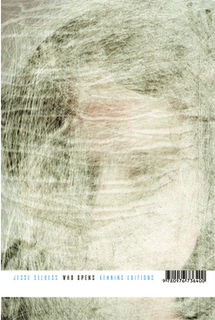
Jesse Seldess's Who Opens was designed by Jeff Clark (a.k.a. Quemadura) & is now available from SPD. Editor/publisher Patrick Durgin has put his Kenning poetry newsletter aside to make way for more books, chapbooks, broadsides & other poetikal ephemera. Here's a review of Who Opens at the A Tonalist blog, & Chicago Postmodern Poetry offers this interview with the author.


The fruits of NaPoWriMo are juicy & variously colored!

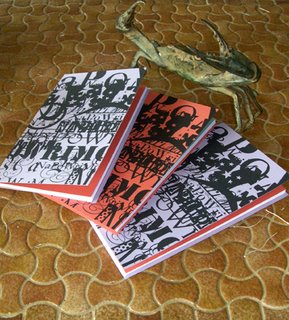
Maureen Thorson (our fearless NaPoWriMo leader) collected one poem each from several April participants for this handbound chapbook, which was distributed gratis to the poets as a keepsake for our strenuous poetic strivings in Spring 2006. Rock. (Not sure if extras are available, but you might try Reen at Big Game Books to see.)


Joshua Corey's Compostition Marble from Pavement Saw Press

Originally titled Composition Marble, a felicitous error redubbed this new book to the author's liking. Though the chap's not yet available through the Pavement Saw online store, it should show up there any day now, so keep yer peepers peeled.


Am I missing something?

I don't doubt it. You energetic kids are a challenge to keep up with. Shoot me an email, & as always, I'm happy to post links to reviews, interviews, articles, site, catalogs, etc., or hey, why not send me an original review of something you've read lately?

Labels: , , ,

June 02, 2006

The break-even point: traditional offset vs. POD

I missed a few interesting things last week while reporting in excruciating detail on my letterpress class, y'all. And one of them is this post by Meritage Press publisher Eileen Tabios.
Having just released my first POD title, I can make some comparisons, including the number of book sales I must sell to cover costs related to printing and designing a book. Here's a comparison of this "break-even" sales point for a POD title versus a title printed through more conventional means, to wit:

POD title: about 133 books

Conventionally printed title: about 435 books.

These numbers are based on moi Meritage Press' experience -- but possibly reflective of many poetry presses. The comparison results mostly from how a publisher doesn't have to incur right away the costs of creating an inventory, which, for Meritage Press titles, historically has been about 1,000 copies. That inventory cost offsets the advantage of conventional printing in its lower cost-per-book basis.

For a POD title, I'd probably first order about 200 copies to cover anticipated review copies, some initial sales, author copies and so on. That's 200 versus 1,000 copies I need finance right away. (Of course I'd order more than 200 copies, depending on a particular poet's "market" but it likely still wouldn't near 1,000 right away.)

Now, if you're a poet or publisher, you know that selling 133 books -- let alone 435 books -- is a chore. It's probably a near-impossibility for many poetry books, at least within a reasonable period of time. (Let me stress -- I'ma talking real poetry sales, not comps or trades. Sales.)

As Eileen notes, the break-even point will vary for each publisher, and is affected by how much is spent on promotional activities such as advertising and complimentary review copies (and their postage), etc., in addition to the base operating costs of running a press (which depends on the size of the outfit, number of employees, distribution system used, etc.) But her analysis gets straight to the advantages of POD over traditional offset printing and warehousing of a full print-run: less money up front and greater flexibility in terms of resource commitment and even storage space (which some publishers have to pay for as well). Cheers to Eileen for sharing, and don't forget to check out Meritage's books!

Labels: ,

May 21, 2006

Amy King satisfies Kate Greenstreet's curiosity


How has your life been different since your book came out?

I am quite famous now. Rock stars ask for my lyrical assistance. Fortune 500 companies court me regularly for major advertising campaigns. David Lynch will soon use the book as a treatment for his next script. Of course, this only makes sense since I've long been an admirer of his films.

Finally, one of the biggest changes happens in seemingly small ways: fellow poets and readers contact me through my website to send kudos or ask a question about poetry. I love that kind of written-word induced conversation. Derrida has long attested to an inversion of the spoken-trumps-the-written binary. I am walking proof: I don't particularly enjoy talking poetics in person, but I adore going back and forth with individuals in private emails.

Read the rest here.

NB: Amy's publisher, BlazeVox Books, uses POD technology to produce their books. Check 'em out, & pick up Antidotes for an Alibi while you're at it!

Labels:

May 08, 2006

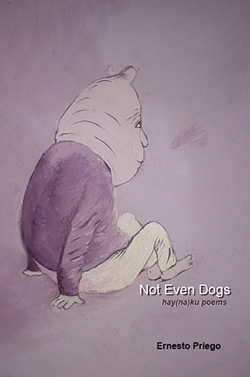
Not Even Dogs now available from Meritage Press!

Not Even Dogs is a first in three ways: it's Ernesto Priego debut poetry collection, it's the first single-author hay(na)ku collection, & it's Meritage Press's first book to be published after making the switch to POD production via Lulu. Counting to three is a potent little charm.

Not Even Dogs by Ernesto Priego
6 x 9, perfect bound, 116 pp.
ISBN 13: 978-1-4116-8992-3
$12.99


An sample poem from the book's third section, "Cities,":
Tenth City

You
were here
before I could

understand
what cities
do to people.

I
used to
play baseball in

cornfields
now condos
with tennis courts,

and
soon you
became the monster

under
everyone's beds
waiting, breathing, grey,

enormous,
fierce, beautiful
yet horribly impossible,

full
of possibility
and still sad

and
so frustrated,
infiltrated by fears

you
yourself cannot
properly define. City

of
lost corners
and savory folklore,

full
of tastes
and noises and

overt
chaos controlled
by god knows

what
call it
quantum physics or

divine
intervention but
you are everywhere

like
a weary
fury deciding futures

of
those who
lived within you.

Here
every inch
is replete with

stories
of unrequitted
love & hate

of
aspiration &
reconstruction & the

abduction
of dreams
& everything else

for
treinta pesos
al día sobrevives

if
things go
well, remember that,

city
of lost
origins & horizons,

of
ambitions &
claxons, of ghosts

under
the fallen
buildings and tents

under
the wealthy
fantastic urban landscapes

of
non-existent cities
that are not

&
could not
but still are.

Unnamable
city, breathing
still, in spite

of
everything you
are because you,

city
where skies
have forgotten all

skies
were meant
to be remains,

loved
and hated,
populated by spectres,

seeking
justice, or
just some peace,

without
hiding behind
self-imposed jail bars.

In
my dreams
I see you

always
from above,
from the sky

or
from an
illuminated cloudy hill,

seeing
you shine
as an artificial,

sick
heart, counting
pulses before finally,

tragically,
silently, turn
out your lights.

Read the other nine cities in the sequence here. (The poems appear in the book in reverse numerical order, 10-1).

Labels: , ,

May 02, 2006

Simultaneous e-book releases?

Fictioneers have been DIYing for years too (as have our comic book friends). Novelists, short-story writers & their publishers are often simultaneously releasing free e-books to complement/promote the printed versions.* As usual, the genre writers seem ahead of the curve here, but even mainstream publishers are picking up on this idea.

Here's a note from a novelist offering such a split edition:
I've just stumbled across your website, and am heartened to find some other people who are doing exactly what I am. I wanted to write and ask if you might mention the release of my novel, which I'm offering as a free e-book download and as a handmade perfect-bound book from my website.

The book is called Idea in Stone, and it's an alternative, magical realist tale about Edinburgh, Scotland. [More info here.]

Now I'm going to add DIY Publishing to my daily RSS feeds!

--Hamish MacDonald


I wrote Hamish back to thank him for his announcement & to recommend Jim Monroe's great site (which I've recommended here before) No Media Kings, since Jim is the go-to guy for DIY fiction ideas. Turns out, Hamish knows Jim too & just wrote an article for No Media Kings about DIY book publishing. (Hamish, check out Lulu.com if you're still interested in POD--far & away better than Cafe Press qualitywise, & without the censorship.) Cool.

* Resident Fiction Consultant (a.k.a. my husband) & I have been discussing the difference of impact on sales for fiction & poetry a free e-book release might have: Since poetry books are shorter & generally collect several pieces they're more convenient to read electronically. Would simultaneously releasing a free e-book cut into the sales of the same book in print, assuming one's goal is to turn profit or at least break even? I think it might, a bit, but that many people will still enjoy/prefer having the physical object. Also, considering POD's classic advantage of a lower breakeven threshhold, it might make more sense for POD publisher to do this than those using offset/inventory warehousing systems. For authors/publishers not concerned with profit, there seems no reason not to release an e-book for free at the same time. Moria does simultaneous releases like this, though Bill actually seems to be looking at the print editions as a supplement to the free content of the magazine & e-chap series, not the other way around.

Labels: ,

April 30, 2006

Since we're also talking DIY marketing/publicity...

...in the comment thread below, now seems like a good time to mention two books I have been meaning to talk about here anyway.

The first is 101 Ways to Sell Poems by Chris Hamilton-Emery of Salt Publishing. I just got this & I've only started flipping through it. I hope to be able to share some detailed notes about it here soon, but in the meantime the catalog pages offers a description & excerpt. The book is divided into four sections: Making Poetry Submissions, Building Your Profile, Sorting Your Book & Selling Your Book. Some of the information in the first two chapters will probably be familiar to many, but assertions like "reviews don't sell books" (which is not to say you shouldn't try to get some), "most poetry is sold to women who are currently over 50 years of age" & "for most publishers the cost of 60 review copies plus their postage will wipe out the profit" might surprise. (And did you know Salt uses POD to print their books? Chris talks about POD's advantages in this interview from Jacket.)

The second book is How to Make a Living as a Poet by Gary Mex Glazner, which just happens to be published by my favorite indie press. (Ahem.) Gary has done some really amazing things to promote poetry, his own & others'. For instance, he's put his books in the nightstands & on the pillows of hotel guests. The multicity, multipoet bus tour? Gary's been there, done that, had it paid for with a liquor sponsorship & even made a documentary about it. No idea is too ridiculous for this man to consider & most of them he gets away with. Here's an interview with Gary. He's also got a blog, of course.

Labels: ,

March 31, 2006

Virtual Artists Collective


Poet/blogger Steven Schroeder writes to introduce us all to the Virtual Artists Collective:
We publish five titles a year--started with Lulu and now use Lightning Source. Individual collective members also do handmade chapbooks and other projects that might be of interest.

Steve also suggests that the University of Alabama's MFA in Book Arts program might be of interest, and indeed it is.

Thanks, Steve! Both have also been added to the resource links in the sidebar.

(And speaking of Lightning Source, I just read yesterday in Publishers Weekly that a new court decision has gone in their favor, reversing an earlier verdict that their print-on-demand process was an infringement of On Demand Machine Corporation's patented technology. Their press release is here (as a PDF). It's all a little technical, but it means you've got another option for printing your DIY books, so they've been added to the resource links as well.)

Labels: ,

March 27, 2006

The economics of poetry publishing (again)

Poet and Meritage Press publisher/editor Eileen Tabios is doing her taxes, and letting us all peek at a tally of her poetry-related expenses vs. her profits for last year at her Chatelaine's Poetics blog. [Note: scroll down to March 27 entry.]

(Thanks, Eileen. I hope switching to POD production helps you keep costs down, and that you'll continue to share your experiences so generously for the enlightenment of all!)

Eileen has also just announced the goodies planned for her 2006 list:

NOT EVEN DOGS by Ernesto Priego

DERIVÉ by Bruna Mori, with sumi-ink paintings by Matthew Kinney

UNPROTECTED TEXTS: SELECTED POEMS (1978~2006) by Tom Beckett

KALI BLADE by Michelle Bautista

Labels: ,